


PacAna™ is an inline Ethernet test platform designed to reproduce, isolate, and analyze intermittent network failures that cannot be captured or recreated using conventional tools.
By combining packet manipulation, fault injection, and precise timing control, PacAna enables engineers to transform rare, non-deterministic issues into repeatable and debuggable events.
Ethernet Fault Injection and Analysis Platform
Reproduce intermittent Ethernet failures on demand
Reduce debug time from days to minutes
Validate system behavior under controlled fault conditions
Enable deterministic testing of timing-sensitive systems
Integrate into automated test environments
Key Benefits
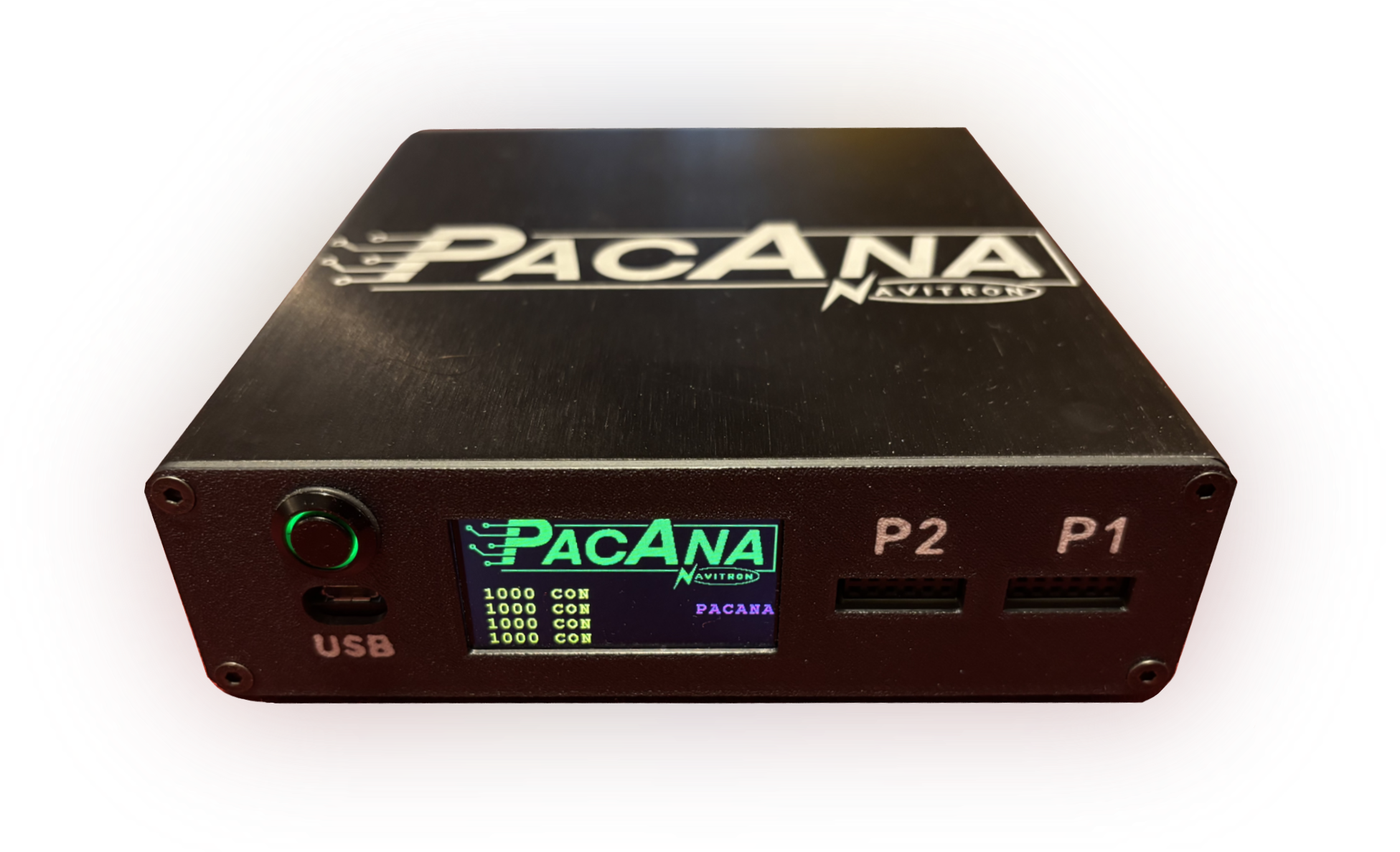
Inline, non-intrusive operation
Deterministic and repeatable fault injection
Fine-grained timing control
Multi-mode operation:
Fault Injection Mode
Inline Analyzer Mode
Traffic Generation Mode
Key FEATURES
Core capabilities
-
Packet delay with fine timing control
Deterministic packet drop and duplication
Header and payload modification in real time
Controlled fault scenarios for system validation
-
Transparent insertion into live networks
Real-time observation of traffic behavior
Correlation of injected faults to system response
Minimal disruption to system under test
-
Scriptable packet generation
Repeatable test scenarios
Emulation of real-world network conditions
Support for stress and boundary testing
why pacana?
| Feature | Conventional Tools | PacAna |
|---|---|---|
| Packet Generation | ✓ | ✓ |
| Traffic Generation | ✓ | ✓ |
| Fault Injection | Limited | Advanced |
| Timing Control | Limited | High Precision |
| Deterministic Debugging | ✗ | ✓ |
Industry Application
-
Debug intermittent AFDX/Ethernet faults
Validate network robustness in safety-critical systems
Analyze timing-related anomalies
-
Validate deterministic timing behavior
Inject faults into in-vehicle networks
Test ECU and switch robustness
-
Diagnose rare packet loss and jitter
Validate firmware under controlled fault conditions
Stress-test communication interfaces
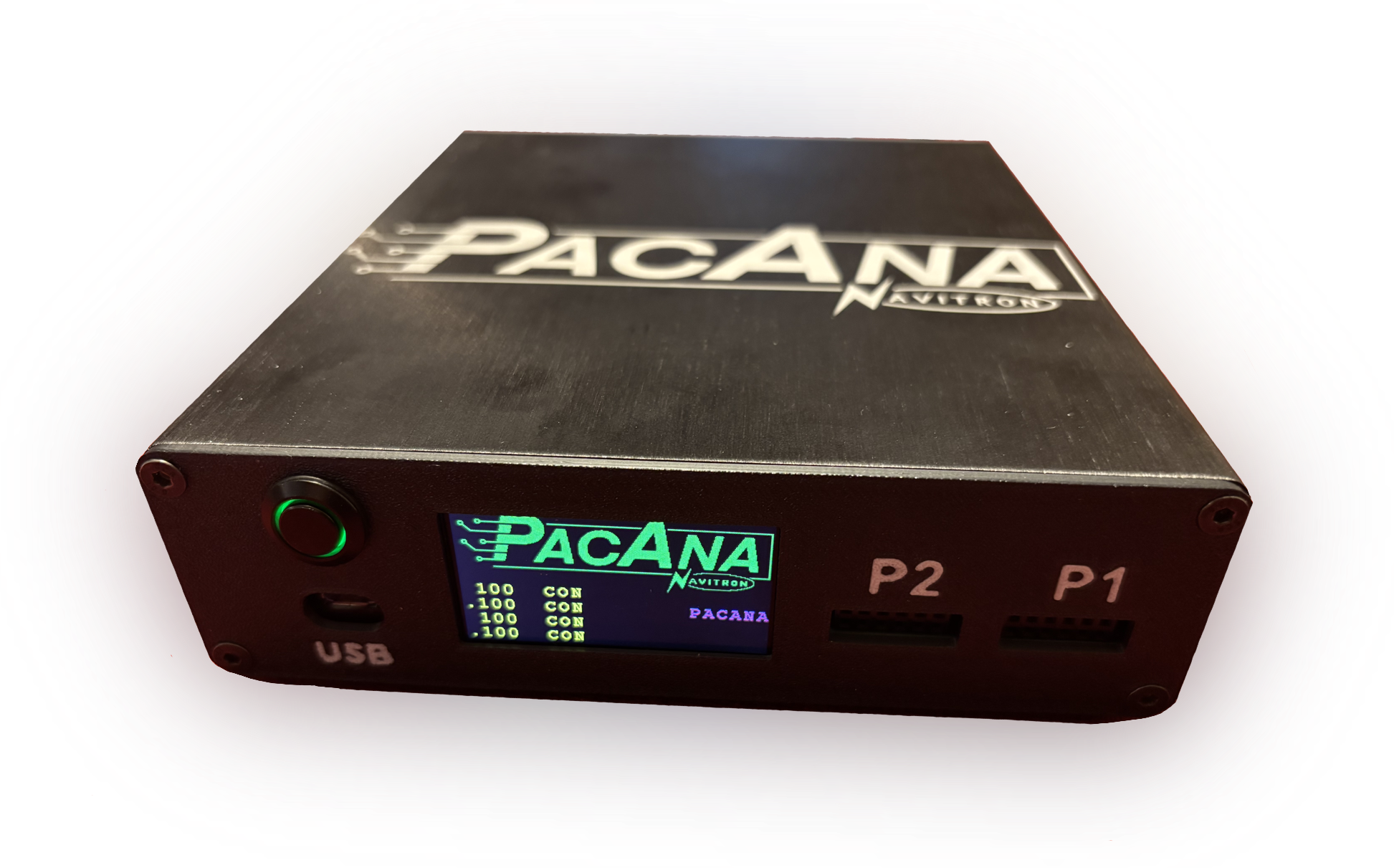
PacAna operates inline between network nodes, providing full visibility and control over Ethernet traffic:
Bidirectional traffic control (Port A ↔ Port B)
Real-time packet inspection and modification
Deterministic fault injection engine
Script-driven operation
System Architecture
Multiple Ethernet ports (A0, A1, B0, B1)
Command/control interface (serial or equivalent)
Scriptable control for automation environments
Suitable for lab and system-level testing
Supports automated test frameworks
Enables repeatable validation workflow
Interface & Integration
Example Use Case
A system experiences a packet timing fault once every several hours.
Using PacAna:
The fault condition is recreated by injecting controlled delay
The issue is reproduced in seconds
Root cause is identified rapidly